What are Blind Boxes?
A blind box is a marketing technique in which the consumer buys a box in which there is a chance of getting a single figure out of a specific set.
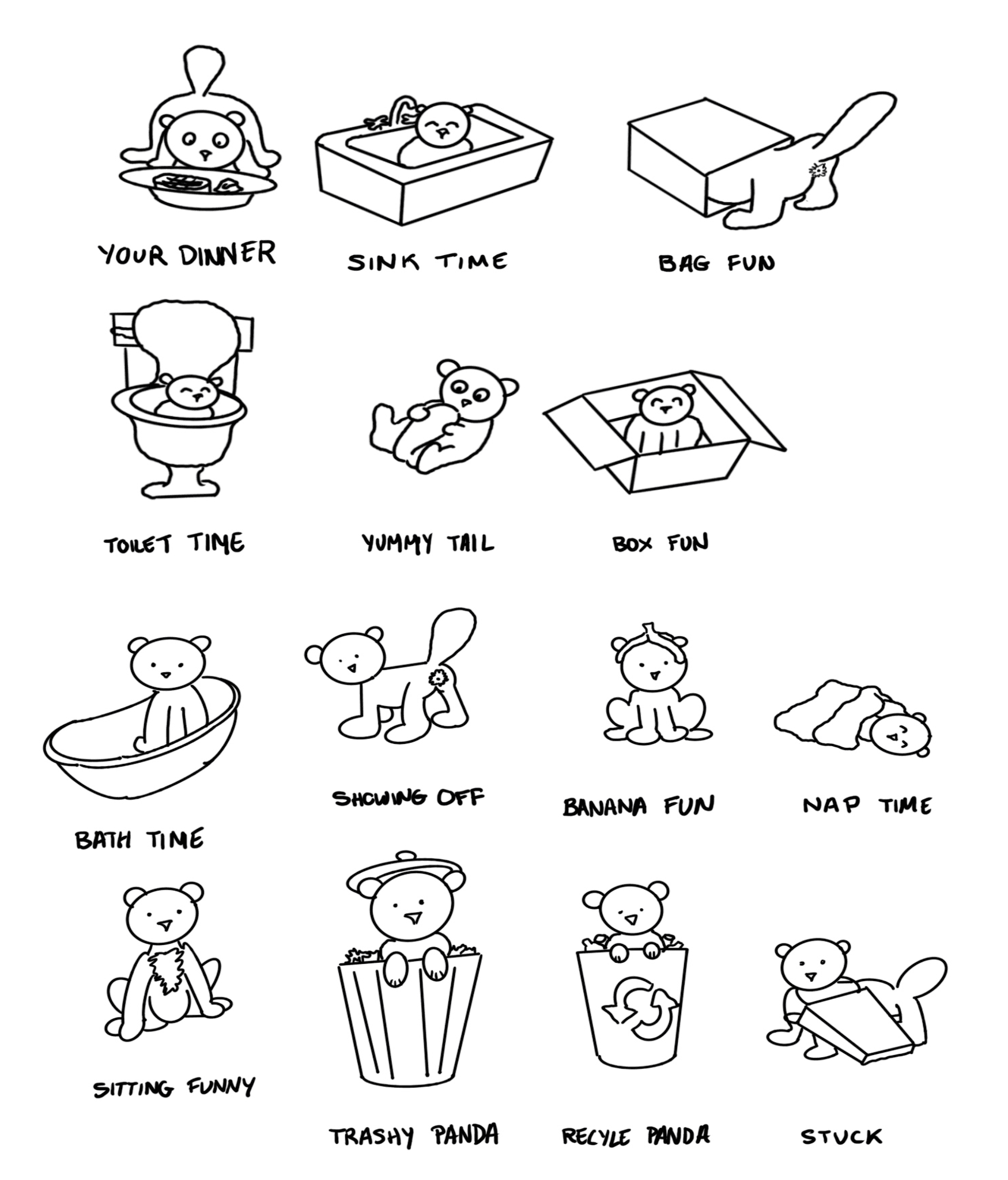
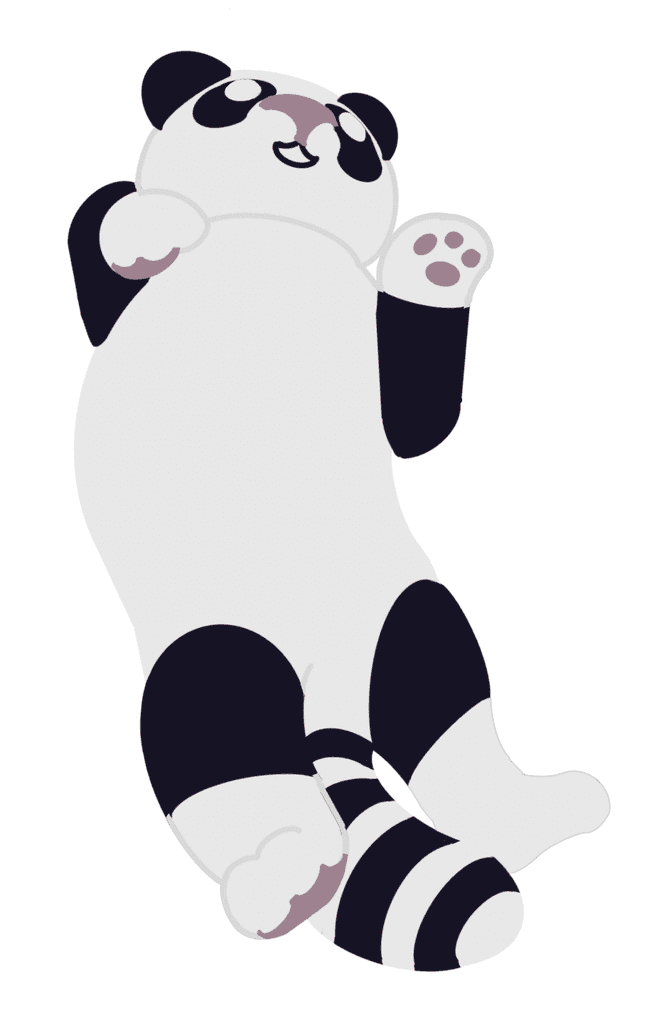
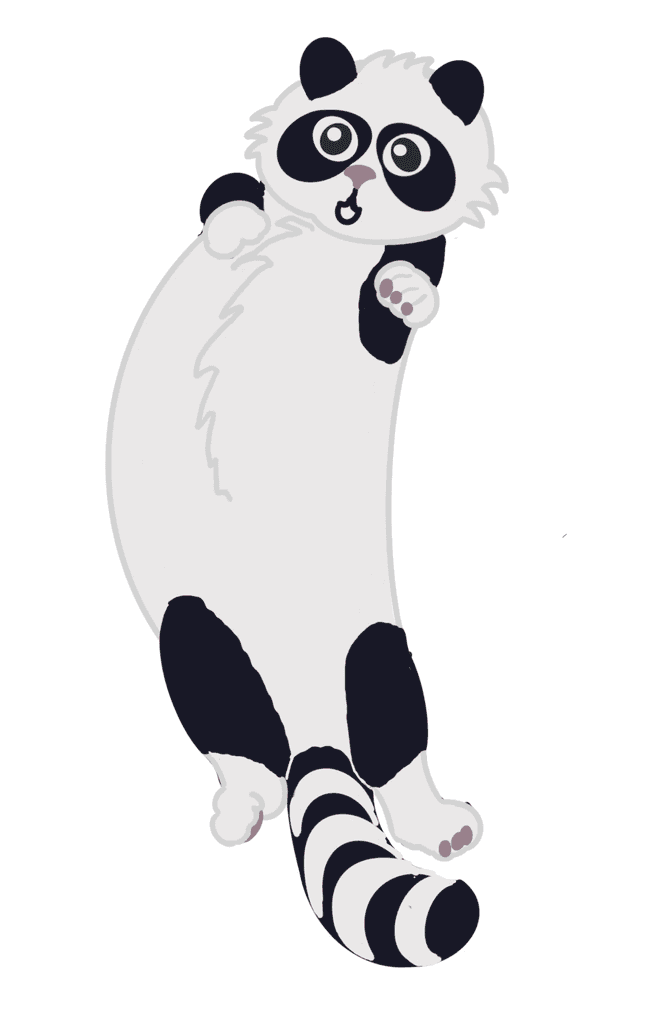
Trash Panda is a combination of a panda and a raccoon. The Trash Panda blind box is a set of 6 positions of the same character causing mischief.
My main challenges in this project were learning character design and learning how to model figures in Nomad Sculpt.
Above are my ideas for different positions to model Trash Panda in.
Below are drawings exploring character design through details in form.
Research
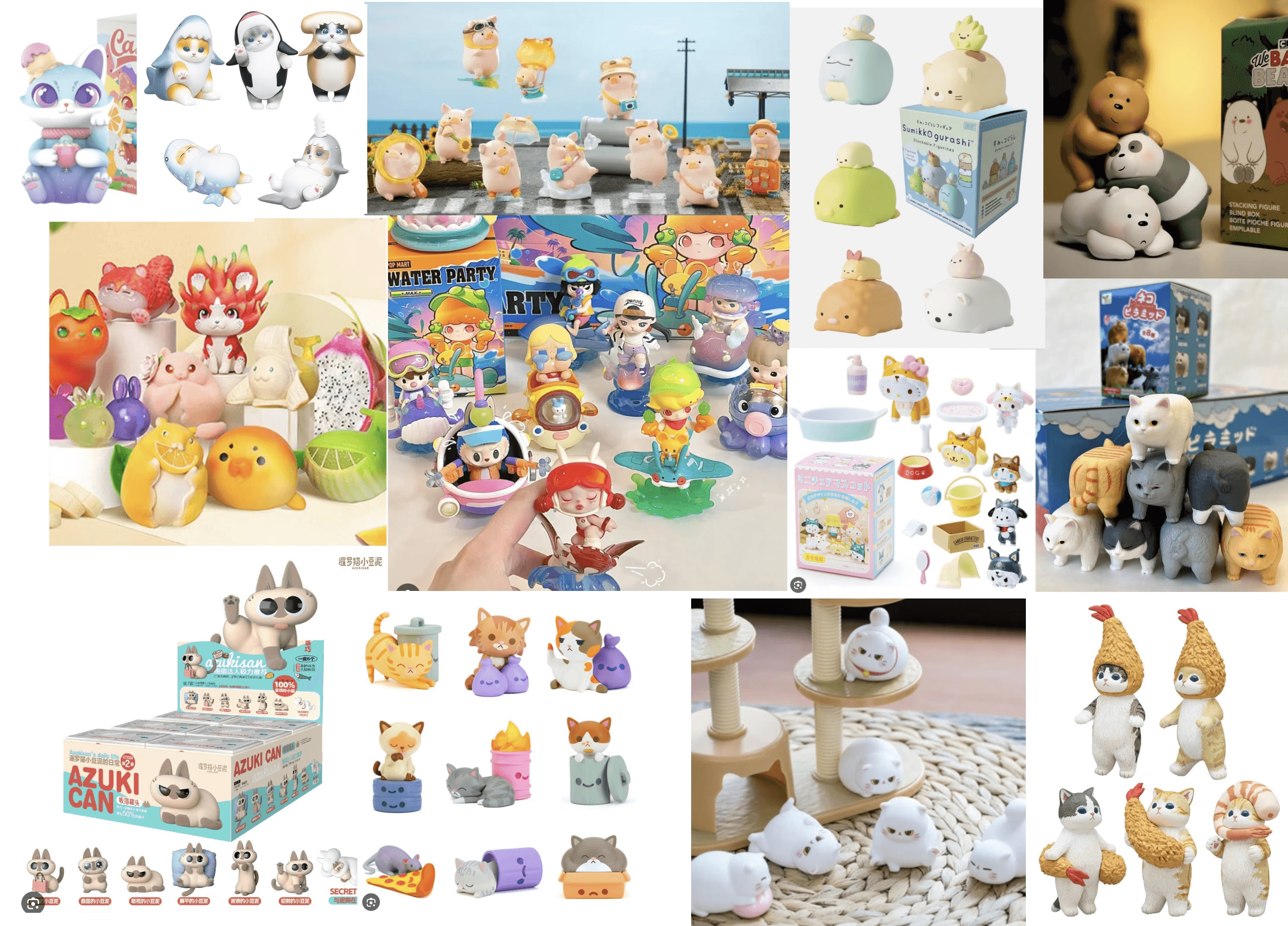
To figure out what makes a sucessful figurine form, I compiled a series of images I found online of blind box figurines that are currently on the market that I thought were visually very successful.
I then placed several of the designs on a T-chart to get a better understanding of what I was looking at.
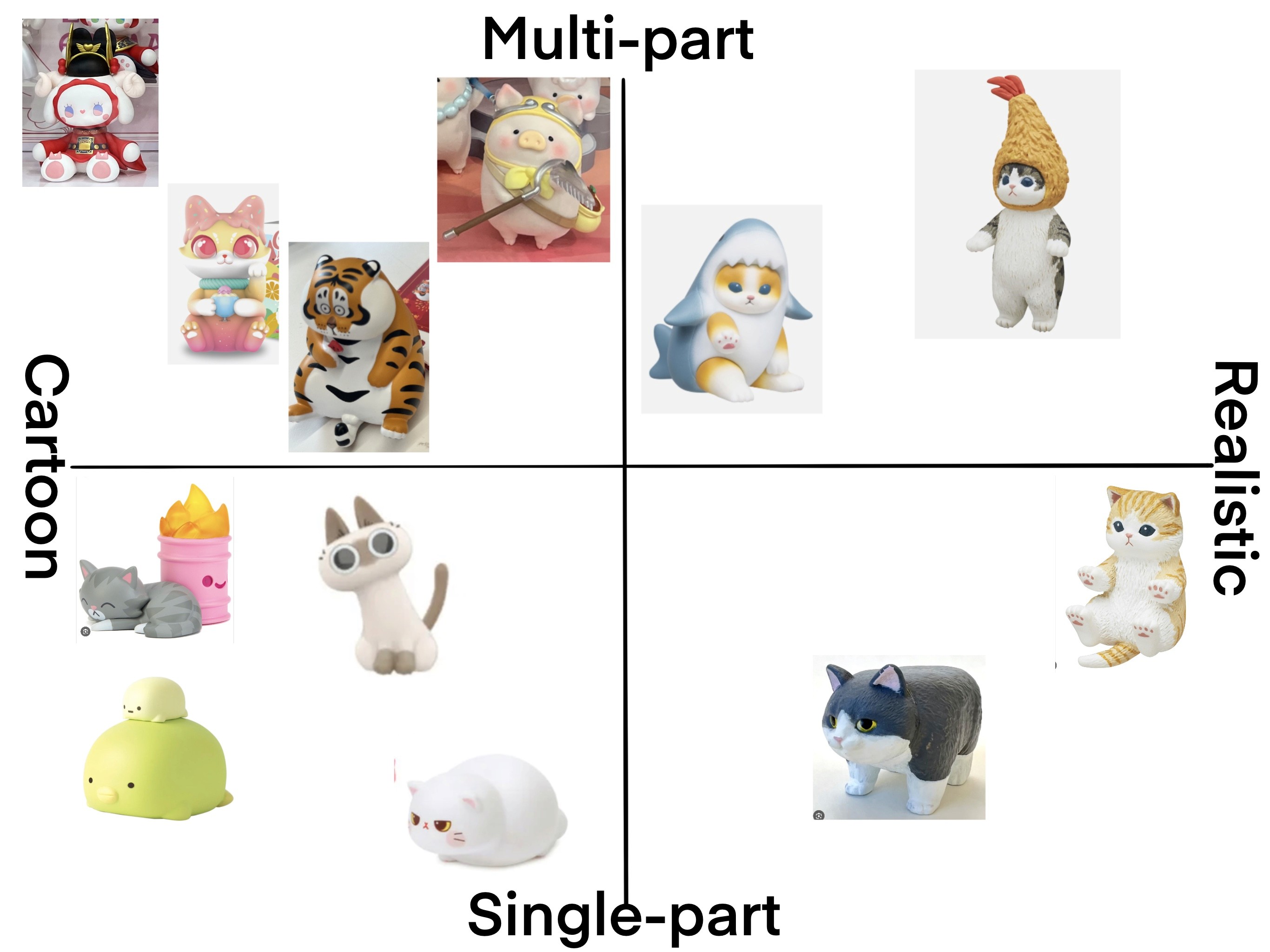
By looking at my research through the T-chart, I was able to come to several conclusions in what makes a blind box figurine visually interesting. While the character itself is important in marketability, visually the most interesting figurines had a form that was interesting because it was nontraditional and thus unexpected to the consumer.
Visually interesting blind box figurines also were not completely smooth and instead had at least some part of the form that was textured. The last thing I noticed that all the visually interesting blind box figurines had in common was that it had bring colors used to highlight specific parts of the form. This let the form catch the consumers eye without being visually overwhelming.
My Sketches
These sketches were made physically using plasticine clay, as well as sculpted digitally using Nomad Sculpt and Rhino and then 3D printed in PLA and resin.
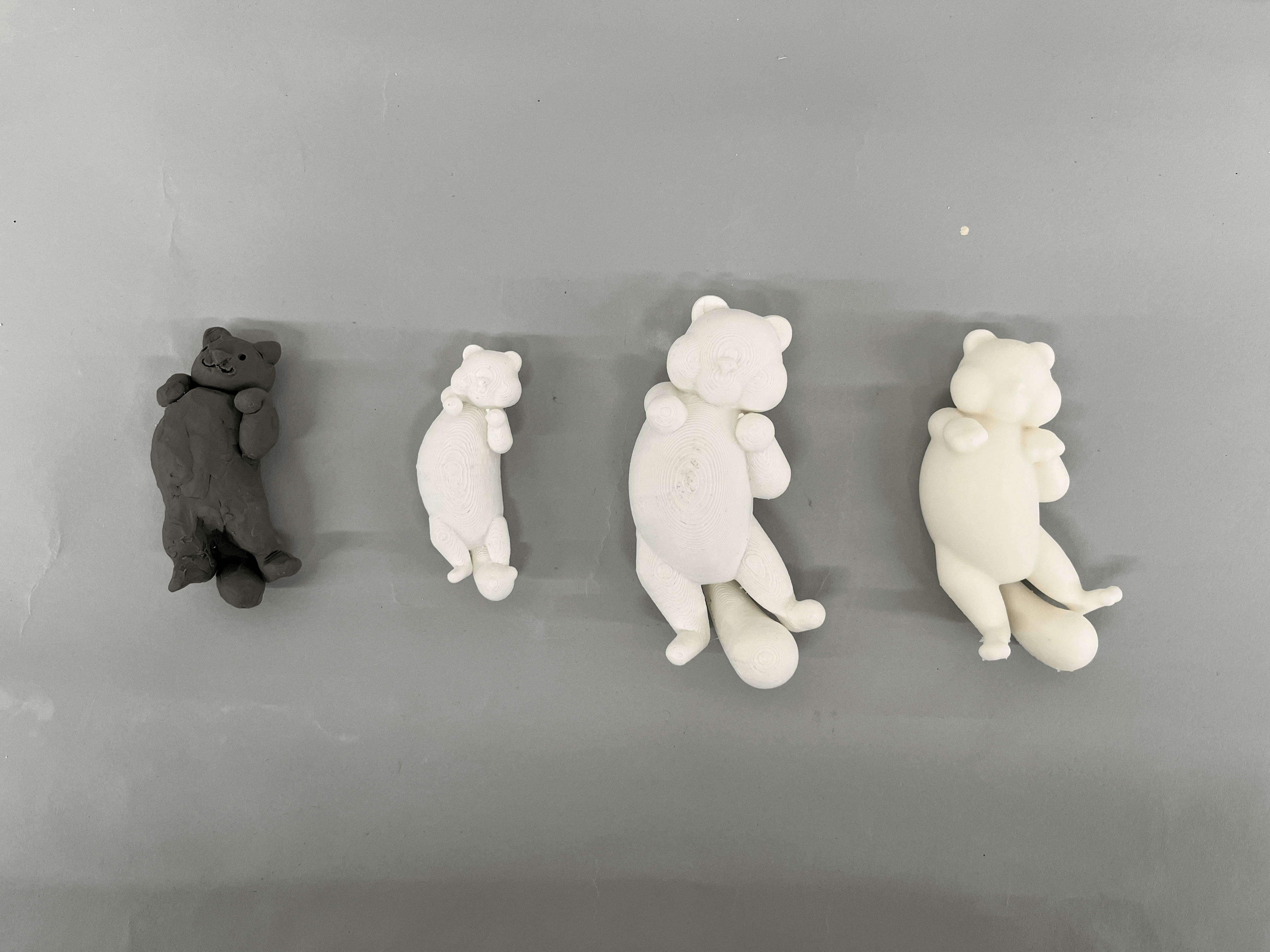
In the first sketch, made of clay, the clay was hard to sculpt at such a small scale. I specifically struggled with creating the face because of this.
The second sketch was my first attempt at digitally sketching in Nomad. Once printed I realized the body was too long and the limbs were too small. The overall size of the figure was also too small
I went back into Nomad and made changes to my sketch. Once printed I realized that while the proportions were much better, this form was overall too big. This form also needed more detail in the hands and feet.
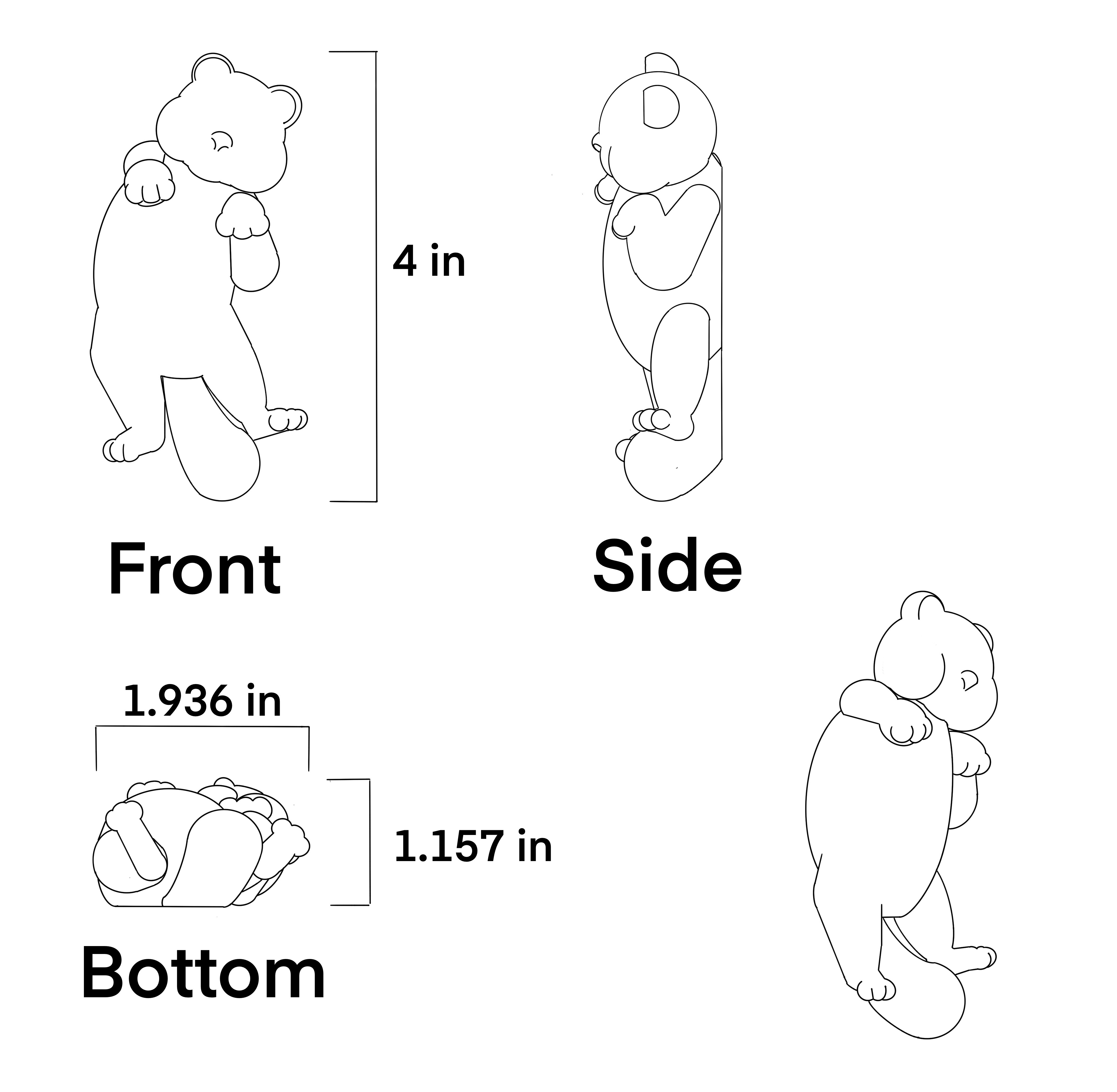
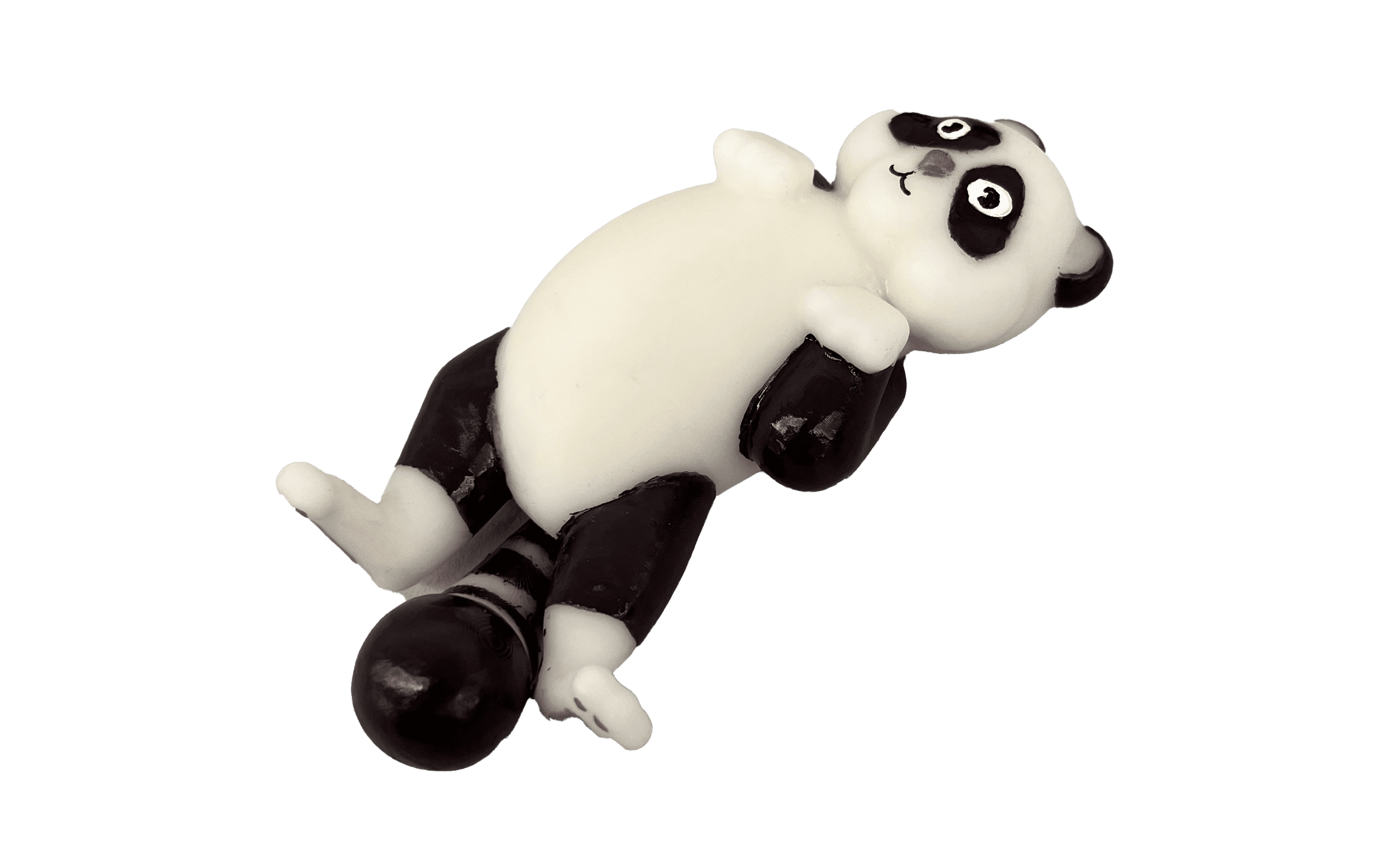
This was my final sketch. It was sized to the ideal size in Rhino. It was also printed in resin.
Final Form
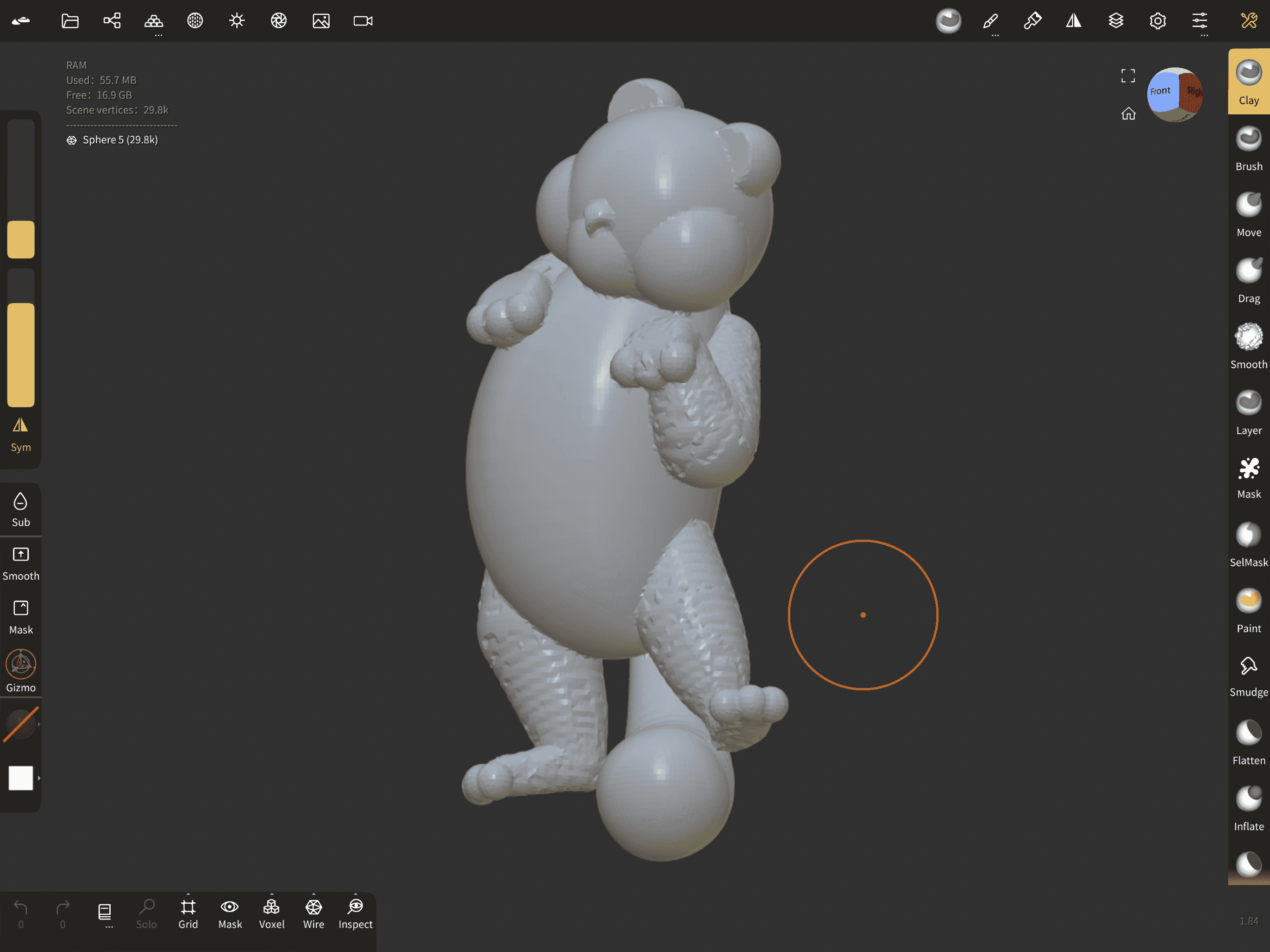
Once I had my final form made in Nomad Sculpt, I put it into Rhino to make sure I had the right scale before sending to print in resin.
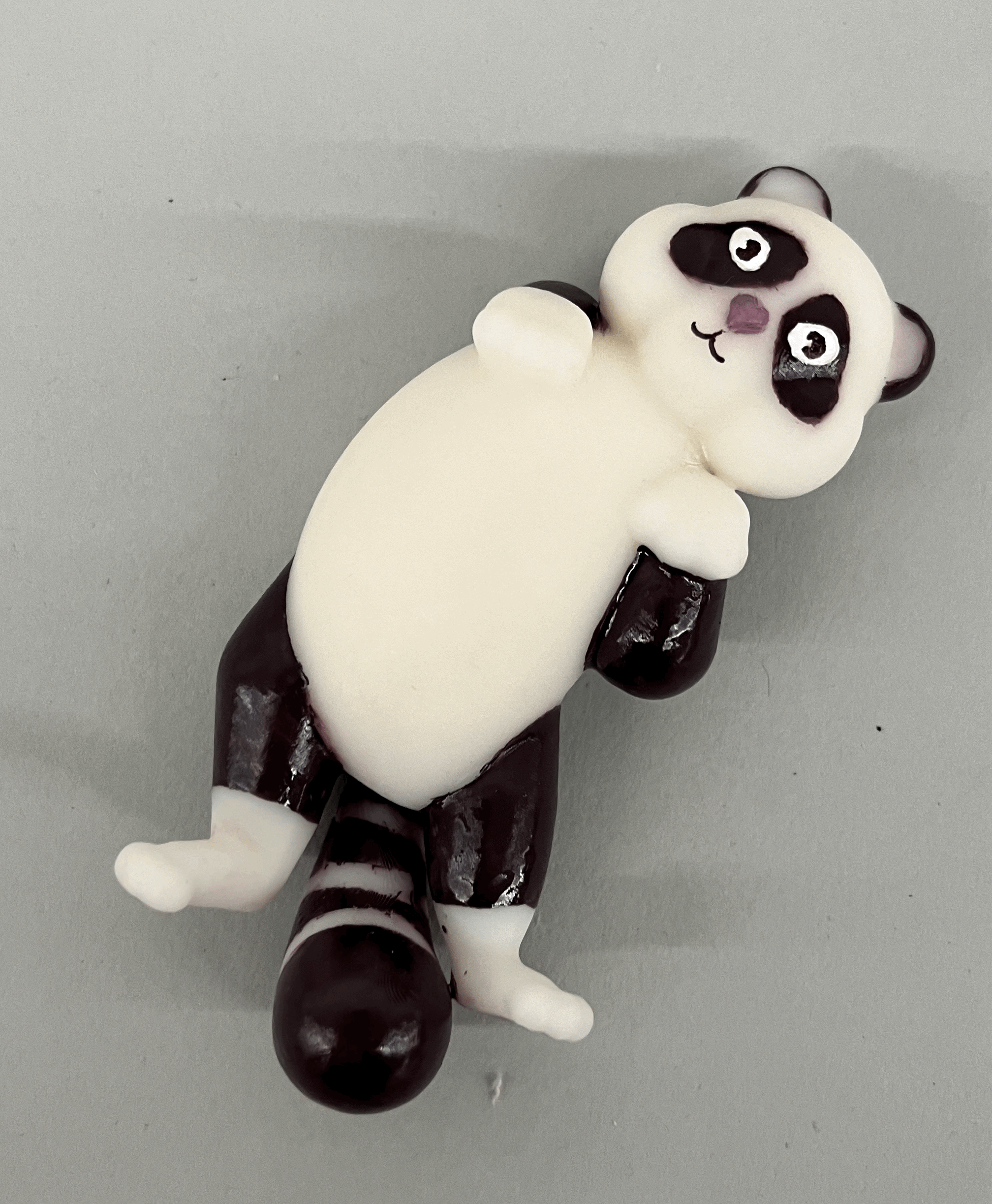
Once printed I used model paint to color the form.
Packaging
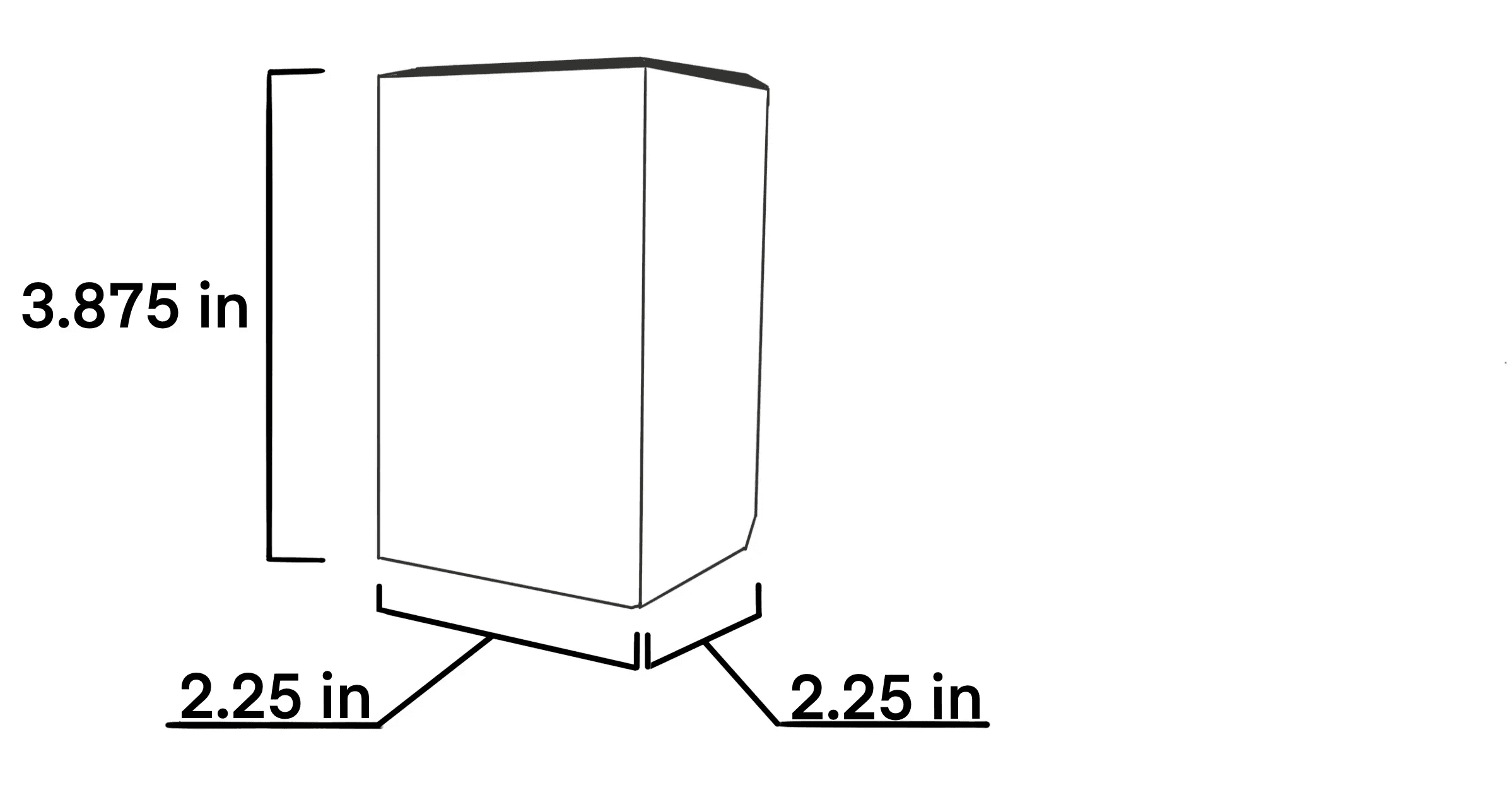
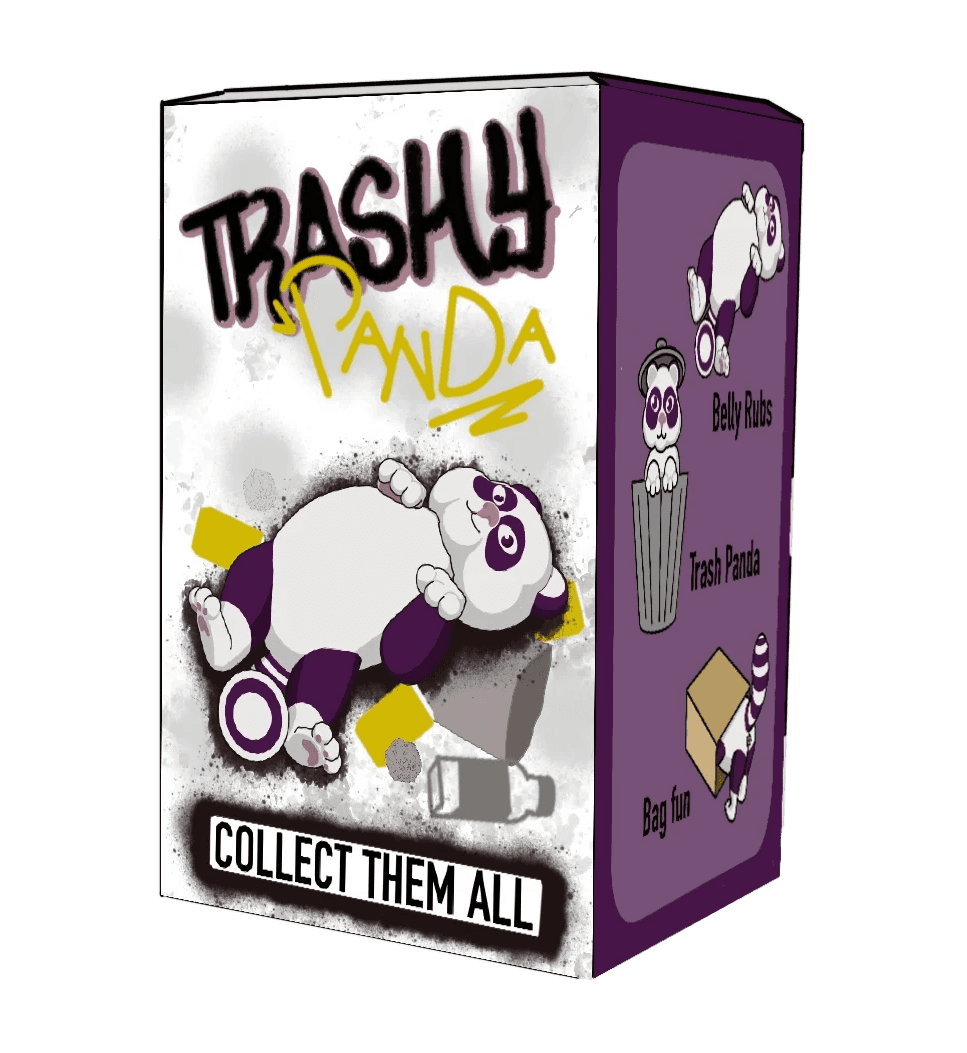
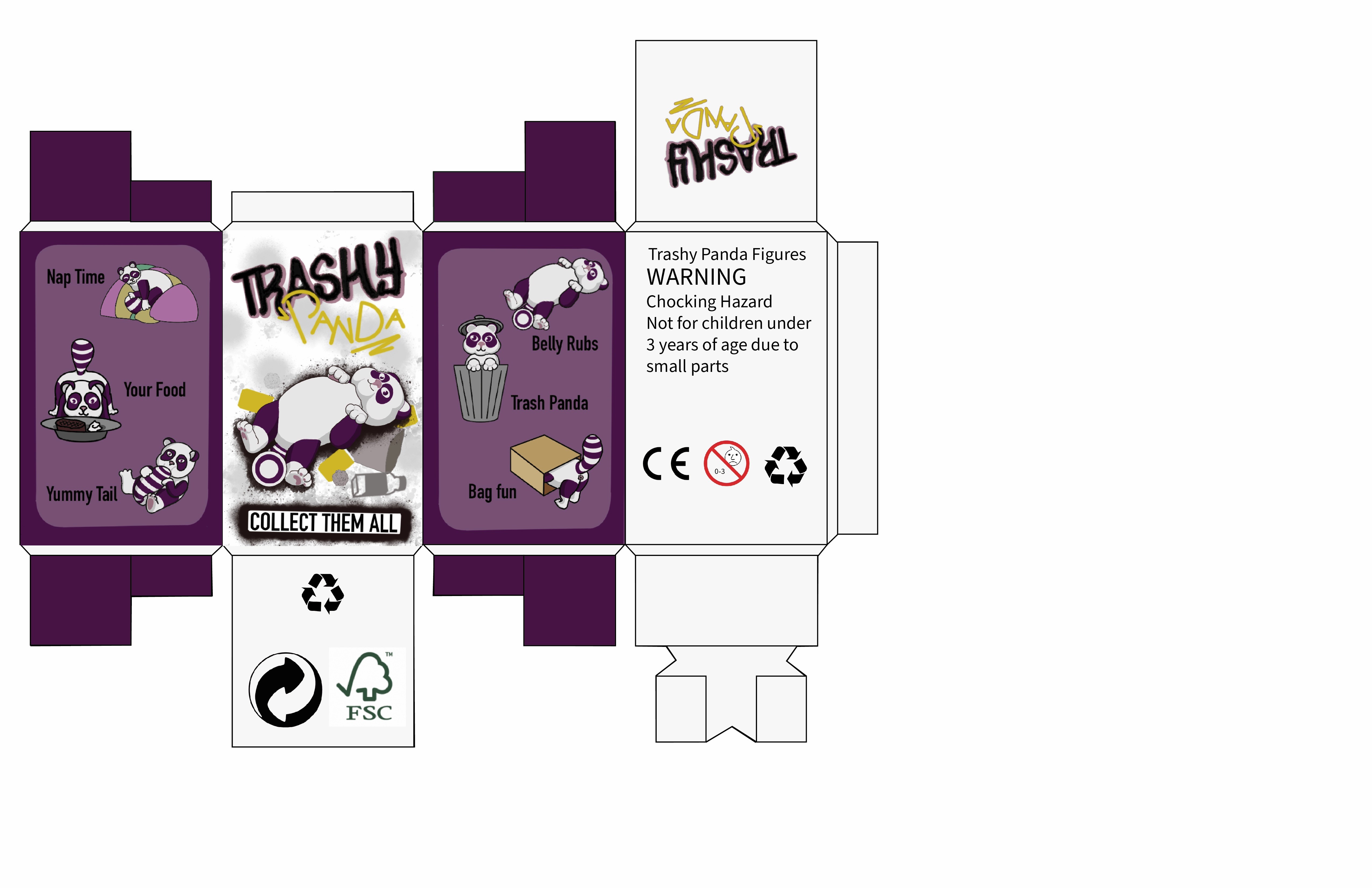
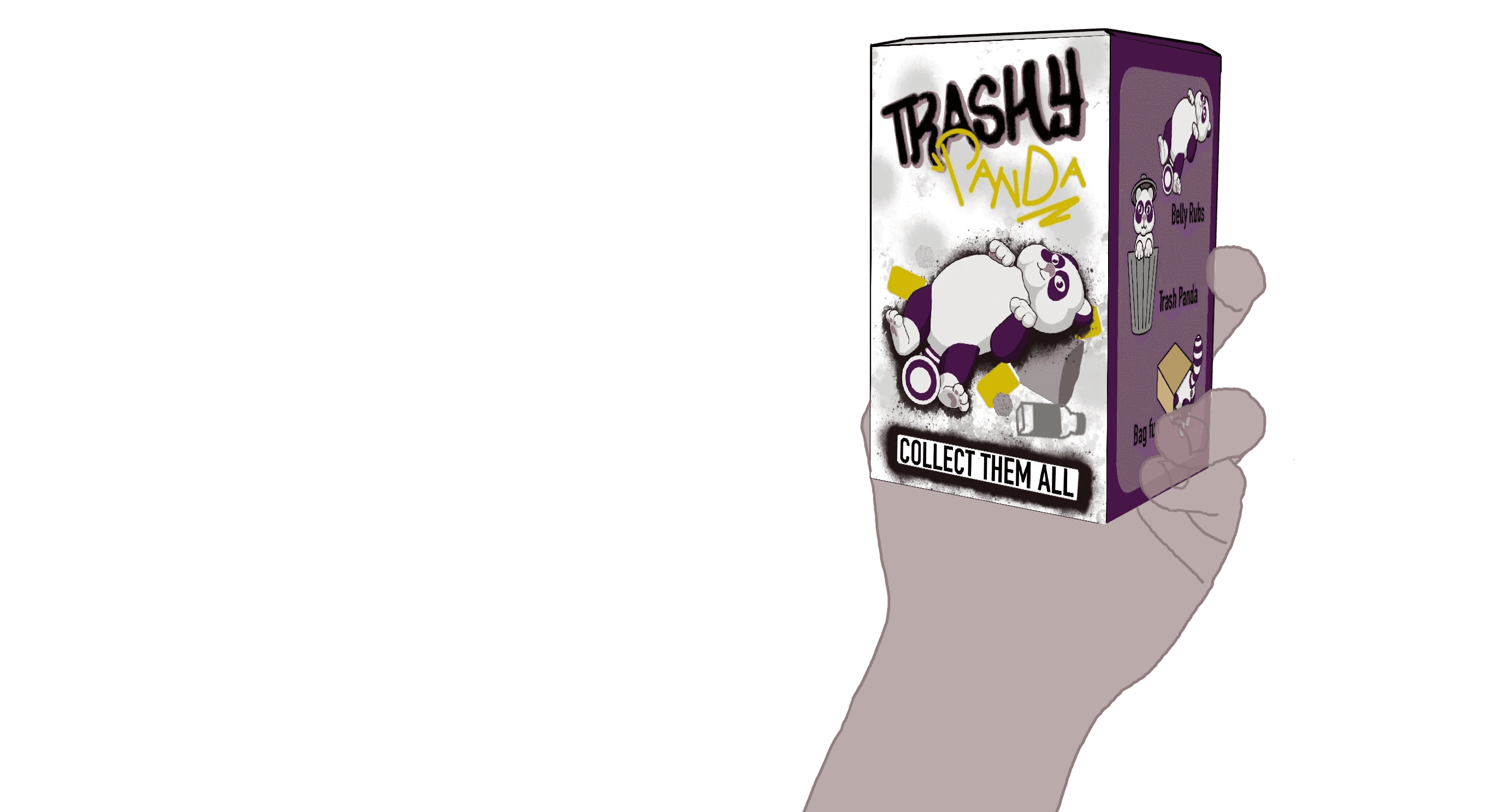
Following the traditional format of the packaging of blind boxes, I tried my hand at packaging design for my product. This was my first time designing packaging.
Once printed I used model paint to color the form.
Final Design
Framer 2025
New York